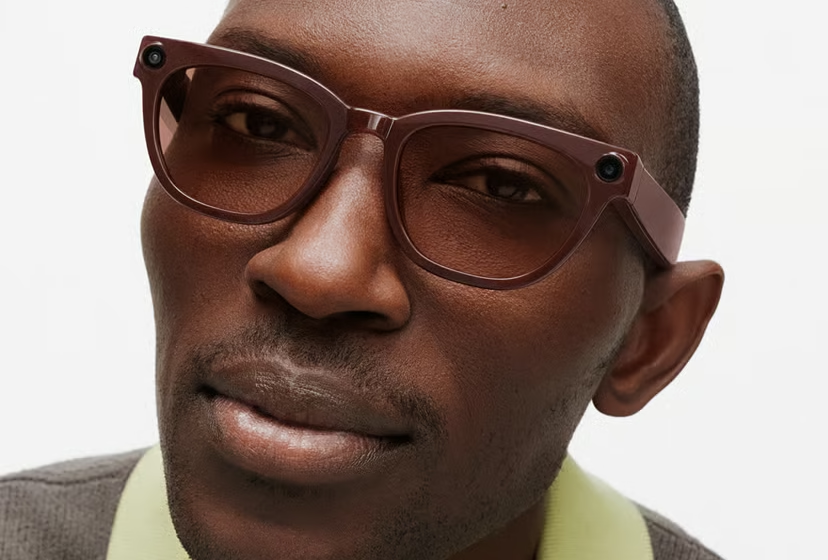

Samsung is preparing to expand its Galaxy ecosystem beyond smartphones, smartwatches and mixed-reality headsets with a new pair of AI-powered smart glasses running Google’s Android XR platform. Developed in collaboration with Google, Qualcomm and eyewear brands Gentle Monster and Warby Parker, the upcoming glasses are designed to combine everyday eyewear with hands-free photography, voice assistance and artificial intelligence.

Unlike bulky virtual reality headsets, Samsung’s upcoming smart glasses are expected to resemble conventional spectacles. They will focus on everyday activities such as taking photographs, listening to audio, receiving spoken directions, translating conversations and interacting with Google’s Gemini AI assistant.
Table of Contents
As of October 17, 2026, reports point towards a possible November 2026 launch. However, Samsung has not yet publicly confirmed the final retail price, exact release date or every leaked specification.
Samsung Android XR Smart Glasses Specifications
The following specifications are based on recent leaks and reports. They should not be treated as final official specifications until Samsung publishes its complete product information.
| Specification | Expected details |
|---|---|
| Product category | AI smart glasses |
| Operating system | Android XR platform |
| AI assistant | Google Gemini |
| Processor | Qualcomm Snapdragon AR1 Gen 1, according to leaks |
| RAM | 2GB, according to leaks |
| Internal storage | 64GB, according to leaks |
| Camera | 12MP, according to leaks |
| Video recording | Up to 3K at 30fps, according to reports |
| Audio | Two open-ear speakers and four microphones, according to leaks |
| Battery life | Reported up to 9 hours; up to 72 hours with charging case under reported conditions |
| Weight | Approximately 41g with standard lenses, according to leaks |
| Water resistance | IPX4 reported for the glasses |
| Connectivity | Wireless smartphone connectivity; final specifications unconfirmed |
| Display | No built-in display expected on the first model |
| Expected launch | November 2026, according to reports |
| Official price | Not announced |
Source: Android Authority and GSMArena.
Design and Build Quality
Samsung’s upcoming Android XR smart glasses are expected to prioritise everyday wearability rather than the immersive design of a conventional VR headset. The frames are intended to look like ordinary prescription glasses or sunglasses, allowing users to incorporate technology into their daily routines without attracting the attention associated with larger headsets.
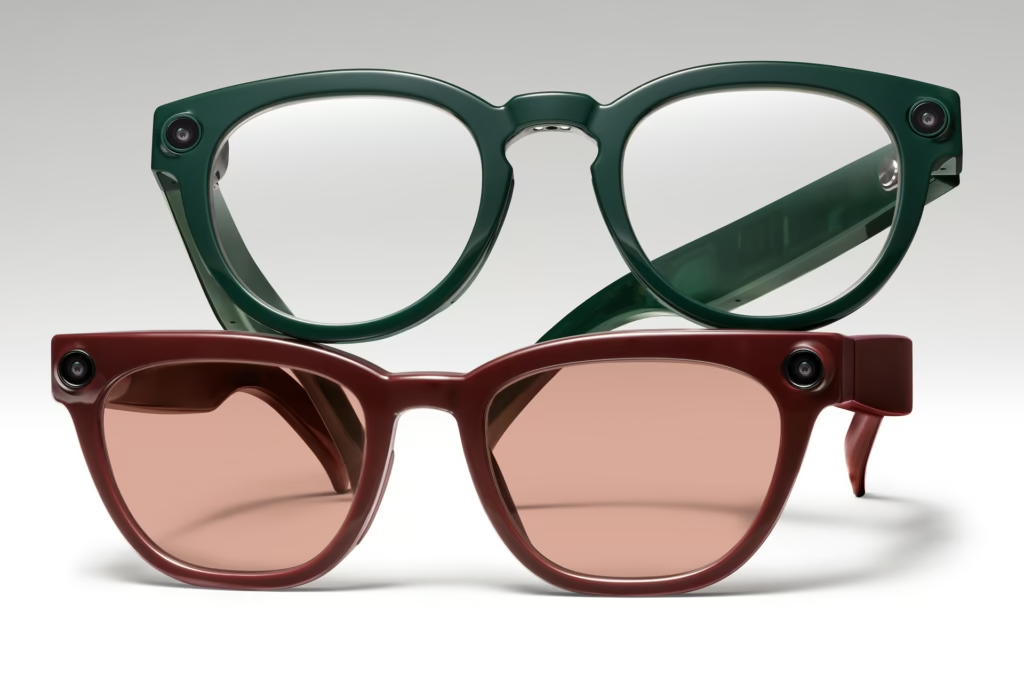
Samsung has partnered with Gentle Monster and Warby Parker, two eyewear brands with established experience in fashion-oriented glasses. These partnerships could help Samsung appeal to consumers who want smart features without compromising personal style.
Gentle Monster Editions
Gentle Monster is known for contemporary eyewear designs, making it a suitable partner for a technology product intended to be worn in public. Recent leaks indicate that its collection could include several frame shapes and numerous combinations of frame colours and lens finishes.
Reported styles range from rectangular and rounded frames to slimmer oval and cat-eye designs. Clear and tinted lens options have also appeared in leaked material. The final range, prescription options and country-specific configurations remain subject to official confirmation.
Warby Parker Editions
Warby Parker is expected to provide additional frame designs aimed at consumers who prefer more traditional eyewear. Leaked information identifies three proposed styles named Alden, Reid and Wren.
The partnership could help Samsung offer smart glasses that appeal to different face shapes and fashion preferences. However, the availability of individual styles, colours and prescription lenses may differ by market.
Weight and Comfort
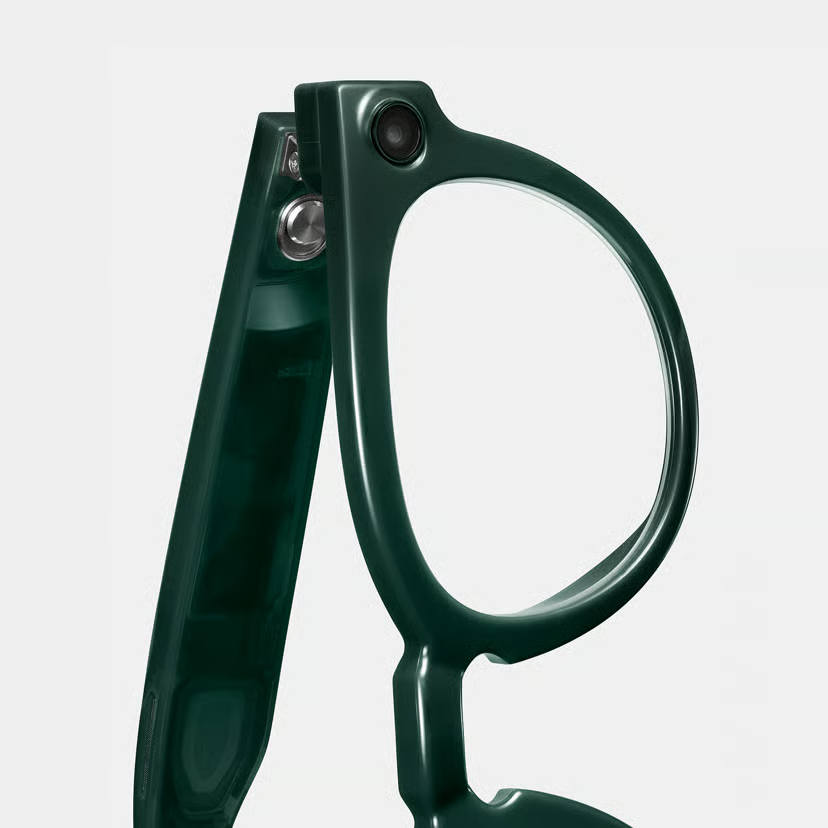
Recent reports suggest that the glasses could weigh approximately 41 grams with standard lenses. If confirmed, this would make them relatively lightweight for glasses that contain a camera, microphones, speakers, wireless electronics and a battery.
Weight distribution will be just as important as the overall figure. Electronic components placed around the temples and bridge can influence long-term comfort, particularly for people who wear glasses for several hours each day.
Samsung’s partnership with established eyewear manufacturers may help address these challenges, although real-world comfort will need to be evaluated after retail models become available.
Android XR and Google Gemini AI
Android XR is Google’s operating system platform for a new generation of extended reality devices, including headsets and smart glasses. Samsung, Google and Qualcomm announced their collaboration on the platform in December 2024.
The platform is designed to combine artificial intelligence, voice interaction, visual understanding and spatial computing. On smart glasses, these capabilities could allow users to interact with digital services while keeping their hands free and continuing to observe their surroundings.
Gemini as a Hands-Free Assistant
Google Gemini is expected to play a central role in Samsung’s smart glasses experience. Rather than requiring users to unlock a smartphone and type a question, the glasses could allow spoken requests and context-aware assistance.
Potential uses include asking questions about objects, requesting explanations of unfamiliar places, getting help with everyday tasks and retrieving information while walking or travelling.
Because Gemini supports multimodal AI, compatible implementations can combine spoken instructions with visual information captured by a camera. The precise capabilities available on Samsung’s retail glasses will depend on the final software and regional service support.
Visual Understanding
A camera-equipped AI wearable can potentially analyse objects and scenes in the user’s surroundings. For example, a wearer might ask about an unfamiliar product, request information about a landmark or use the camera to capture a document for later reference.
These functions could reduce the need to repeatedly take a smartphone out of a pocket. However, the glasses will depend on the quality of their camera, network connectivity where required, software support and the accuracy of the AI system.
Camera and Photography Features
Camera functionality is expected to be one of the major attractions of Samsung’s first Android XR smart glasses.
Leaks point towards a 12-megapixel camera capable of recording video at up to 3K resolution and 30 frames per second. Samsung has not yet confirmed these figures in a complete public specification sheet.
Hands-Free Photography
A camera mounted on the frame could allow users to capture photographs from their own perspective without holding a smartphone. This may be useful when travelling, walking, cooking, attending events or participating in outdoor activities.
The hands-free approach could make spontaneous photography more convenient because the wearer would not need to raise a phone every time an interesting moment occurs.
Video Recording
If the reported 3K recording capability is accurate, the glasses could offer sufficient resolution for many casual videos and social media clips.
Nevertheless, video quality depends on more than resolution. Image stabilisation, exposure control, colour reproduction, microphone performance and low-light processing will all affect the final result.
Users should also consider battery consumption and storage requirements when recording extended videos. Samsung has not yet confirmed the full range of camera settings or recording limitations.
AI-Assisted Content Capture
Integration with Gemini could make the camera useful for more than photography. Depending on supported applications, users may be able to capture information from a whiteboard, identify objects or ask questions about something visible in front of them.
Some reported demonstrations of Android XR concepts include the ability to use captured information in productivity applications. The precise applications available on Samsung’s glasses remain to be confirmed.
Audio, Microphones and Voice Interaction
Leaked specifications indicate that the glasses may include two open-ear speakers and four microphones.
Open-ear audio allows users to listen to spoken responses, notifications and other supported content without completely blocking surrounding sounds. This can be useful when walking through familiar environments or interacting with other people.
The microphones could support voice commands, conversations with Gemini, calls and other audio functions. Multiple microphones can help a device capture speech, although actual performance depends on microphone placement, noise reduction and software processing.
Audio privacy remains an important consideration. Users should be aware that sound may be audible to nearby people, depending on volume and the environment.
Processor, RAM and Storage
Recent leaks identify the Qualcomm Snapdragon AR1 Gen 1 as the processor powering Samsung’s first smart glasses. The same reports suggest 2GB of RAM and 64GB of internal storage.
Snapdragon AR1 Gen 1
The Snapdragon AR1 Gen 1 platform is designed for lightweight smart glasses rather than the more computationally demanding mixed-reality headsets that require larger processors and advanced display systems.
Such a platform can support functions including image capture, audio processing, wireless communication and AI-assisted wearable experiences. More complex AI tasks may rely on a connected smartphone or cloud services, depending on the feature.
2GB RAM
The reported 2GB of RAM would reflect the relatively focused role of the glasses. Their main purpose is expected to be capturing information, delivering audio and interacting with AI services rather than running a complete desktop environment.
Samsung has not confirmed the memory configuration, and buyers should wait for official specifications before making comparisons with competing products.
64GB Storage
The reported 64GB of storage could provide space for photographs, videos, system software and other supported data.
Actual usable capacity would be lower after accounting for the operating system and preinstalled software. It is also not yet confirmed whether the final model will support expandable storage.
Battery Life and Charging Case
Battery life will be particularly important because smart glasses are designed to be worn throughout everyday activities.
Recent leaks suggest that Samsung’s glasses could provide up to nine hours of use, with a charging case extending the total to as much as 72 hours under reported conditions. These figures have not yet been confirmed by Samsung, and actual endurance will depend on usage.
Frequent camera recording, voice conversations, continuous AI interaction, music playback and wireless connectivity can consume more power than occasional use.
A charging case would make it easier to recharge the glasses between activities without carrying a separate power adapter. Nevertheless, buyers should distinguish total usage across multiple recharges from continuous operating time on a single charge.
Water Resistance and Everyday Durability
Leaks indicate an IPX4 water-resistance rating for the glasses. An IPX4 rating generally means protection against splashing water under specified test conditions.
This could provide reassurance when using the glasses in light rain or during everyday activities. However, it does not mean the glasses are waterproof or suitable for swimming, showering or submersion.
Users should also protect the electronics from excessive moisture, follow the official cleaning instructions and check whether the charging case has a separate protection rating.
Connectivity and Smartphone Compatibility
The upcoming glasses are expected to work with Android smartphones, with reports suggesting that basic functions may also be available when paired with an iPhone.
Samsung Galaxy smartphones could receive additional integration features through the company’s software ecosystem. Certain advanced functions may require particular versions of One UI, Android or other compatible software.
Potential connectivity uses include transferring captured media, receiving notifications, accessing AI services and managing the glasses through a companion application.
However, Samsung has not confirmed every compatibility requirement. Users should verify whether their specific phone supports the intended features before purchasing the glasses.
Samsung Android XR Glasses vs Samsung Galaxy XR Headset
Samsung’s upcoming smart glasses and its Galaxy XR headset are designed for different types of use.
| Feature | Upcoming smart glasses | Galaxy XR headset |
|---|---|---|
| Form factor | Conventional glasses-style frame | Immersive headset |
| Main purpose | Everyday AI assistance, photography and audio | Immersive XR applications and spatial computing |
| Built-in display | No display expected on the first model | Integrated high-resolution displays |
| Portability | Designed for everyday wear | Larger headset form factor |
| AI interaction | Expected Gemini voice and camera assistance | Multimodal AI with voice, vision and gesture interaction |
| Primary interaction | Voice, camera and audio | Voice, vision, gesture and immersive interfaces |
| Price | Not announced | Launched in the US at $1,799.99 |
The Galaxy XR headset is designed for immersive experiences, virtual screens and spatial applications. The first smart glasses are expected to focus on lighter, more frequent everyday interactions.
For more information, visit Samsung’s official Galaxy XR announcement.
Samsung Android XR Smart Glasses Release Date
Samsung has been developing its smart-glasses strategy as part of its broader Android XR collaboration with Google and Qualcomm.
Reports published in October 2026 point towards a possible November launch for the first Android XR smart glasses. A report citing a Samsung official indicated that the company was targeting November, although a specific release date and complete retail details were not confirmed.
Samsung has also showcased its broader XR ambitions and partnerships with eyewear brands. However, a reported launch window should not be treated as a confirmed shipping date for every model or market.
For continuing coverage, see 9to5Google’s report on the expected release window.
Expected Price and Availability in the United States, Europe and Asia
As of October 17, 2026, Samsung has not announced an official retail price for its upcoming smart glasses. Any prices circulating before the official announcement should therefore be treated as speculation.
United States
The United States is expected to be an important launch market. Reports indicate that Samsung’s smart glasses could be sold through Samsung Experience Stores and the websites or retail channels of its eyewear partners.
Warby Parker editions are reported to be aimed at the US market initially, while Gentle Monster models are expected to be offered in the United States and South Korea. Final availability remains subject to official confirmation.
Europe
Samsung has not confirmed country-specific European pricing or a complete European launch schedule for the smart glasses.
Potential buyers should monitor Samsung’s regional websites and the official channels of its eyewear partners. Local taxes, prescription options, product certifications and warranty arrangements could affect availability.
Asia
South Korea is expected to be a significant market, particularly for the Gentle Monster editions. However, a confirmed launch schedule and retail price for every Asian country have not been announced.
Availability in individual markets may depend on local partnerships, language support, AI service availability and regional software features.
| Market | Expected availability | Official price |
|---|---|---|
| United States | Reported launch market; final date unconfirmed | Not announced |
| Europe | Country-specific availability unconfirmed | Not announced |
| Asia | South Korea is a reported initial market; other countries unconfirmed | Not announced |
Consumers should wait for official pricing before comparing the glasses with competing products. Any final cost will depend on the chosen frame, lens configuration, taxes and local retail arrangements.
Privacy and Security Considerations
Camera-equipped smart glasses introduce privacy questions because they can capture photographs and video from the wearer’s point of view.
People nearby may not immediately know when a recording is taking place. Samsung will need to communicate how recording indicators, permissions, media storage and AI processing work on the final product.
Users should respect local privacy laws and the rules of workplaces, schools, museums and other venues where recording may be restricted.
AI features also raise questions about how captured images, voice recordings and other information are processed. Buyers should review Samsung’s privacy documentation and Google’s applicable AI privacy policies before enabling connected services.
Expected Advantages and Limitations
Potential Advantages
- Conventional eyewear styling from established fashion brands.
- Hands-free photography and video recording.
- Expected integration with Google Gemini AI.
- Open-ear audio for listening while remaining aware of surroundings.
- Lightweight design suited to everyday wear.
- Potential smartphone integration across multiple platforms.
- Charging case for convenient portable recharging.
- Integration with the wider Android XR ecosystem.
Potential Limitations
- Official price and full specifications remain unconfirmed.
- The first model is expected to lack an integrated visual display.
- Advanced features may depend on a compatible smartphone or network connection.
- Battery life will vary with camera and AI usage.
- Regional availability may be limited at launch.
- Camera use raises privacy and recording-consent considerations.
- Some Galaxy-specific features may require compatible Samsung devices.
Frequently Asked Questions
What are Samsung’s upcoming Android XR smart glasses?
They are expected to be lightweight AI-powered glasses developed by Samsung with Google, Qualcomm, Gentle Monster and Warby Parker. Their anticipated features include a camera, integrated audio and Gemini AI assistance.
When will Samsung launch its Android XR smart glasses?
Reports point towards a possible November 2026 launch, but Samsung has not confirmed an exact retail release date.
How much will Samsung’s smart glasses cost?
The official price has not been announced. Buyers should wait for Samsung’s announcement rather than rely on unverified estimates.
Will the glasses have a built-in display?
The first model is expected to be display-less, focusing on camera functions, audio and AI assistance. Separate display-equipped smart glasses have been discussed in reports about Samsung’s wider XR roadmap.
Will Samsung’s smart glasses use Google Gemini?
Gemini AI integration is expected to be a major feature, enabling voice assistance and visual understanding. The final capabilities may vary by software version and region.
What processor will the glasses use?
Leaks identify Qualcomm’s Snapdragon AR1 Gen 1 as the expected processor, but Samsung has not yet published a complete official specification sheet.
How long will the battery last?
Recent reports suggest up to nine hours of use and up to 72 hours with a charging case. These figures remain unconfirmed and will depend on usage conditions.
Will the glasses work with iPhones?
Reports suggest basic compatibility with iPhones as well as Android phones, although some advanced features may be exclusive to compatible Samsung Galaxy devices.
Will the glasses be available in Europe and Asia?
Samsung has not confirmed a complete regional release schedule. Buyers should check local Samsung websites and authorised eyewear retailers for official availability.
Conclusion
Samsung’s upcoming Android XR smart glasses could become an important addition to the Galaxy ecosystem by bringing AI assistance into a more familiar and portable form factor.
The expected combination of a camera, open-ear speakers, microphones, Gemini AI and fashionable frames could make the glasses useful for photography, communication, navigation and everyday information retrieval.
The reported November 2026 launch window places the product close to a potential retail debut, but important details remain outstanding. Samsung still needs to confirm the official price, complete specifications, final battery claims and country-specific availability.
For consumers considering a purchase, the most important factors will be comfort, camera quality, privacy controls, smartphone compatibility and the usefulness of Gemini-powered features. If Samsung delivers reliable AI assistance in a lightweight design, its first Android XR smart glasses could become a meaningful competitor in the growing smart-eyewear market.
Sources and References
- Samsung Newsroom: Introducing Galaxy XR
- Google: Gemini on Android XR glasses and headsets
- Google: Android XR platform announcement
- 9to5Google: Report on Samsung’s expected launch window
- Android Authority: Leaked specifications and frame designs
- GSMArena: Report on camera, battery and hardware details