Electric Train: How It Works, Types, Benefits, Components, and the Future of Electric Rail Transport

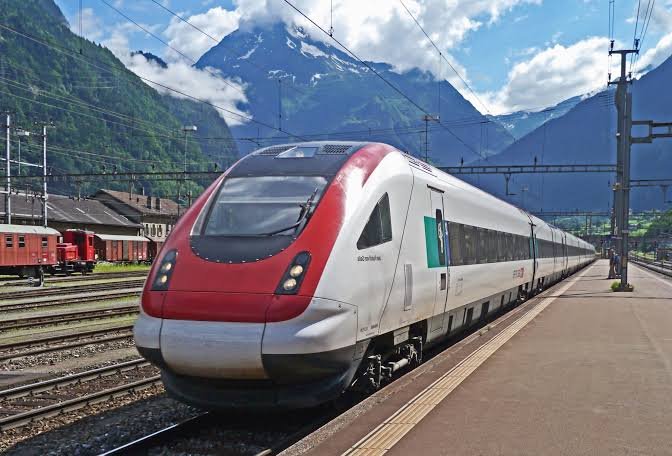
Electric trains are among the most important technologies in modern railway transportation. They use electrical energy to power traction motors instead of relying directly on diesel engines or other fossil-fuel combustion systems. From urban metro networks and commuter railways to high-speed passenger services and heavy freight corridors, electric trains operate across a wide range of railway systems.
Table of Contents
An electric train can receive electricity from an overhead catenary through a pantograph, from an electrified third rail, or, in some applications, from onboard batteries. Once electricity reaches the train, traction equipment converts and controls the electrical power before delivering it to electric motors that turn the wheels.
The technology offers several important characteristics, including high acceleration, efficient operation, regenerative braking, reduced local air pollution, and compatibility with high-speed rail. The International Energy Agency describes rail as one of the world’s most energy-efficient transportation modes, noting that rail carried a significant share of passenger and freight activity while accounting for a much smaller share of transport energy demand.
What Is an Electric Train?
An electric train is a railway vehicle powered by electricity rather than using an onboard diesel engine as its primary source of traction energy.
Electricity can reach the train through several systems. The most common are overhead wires and third rails.
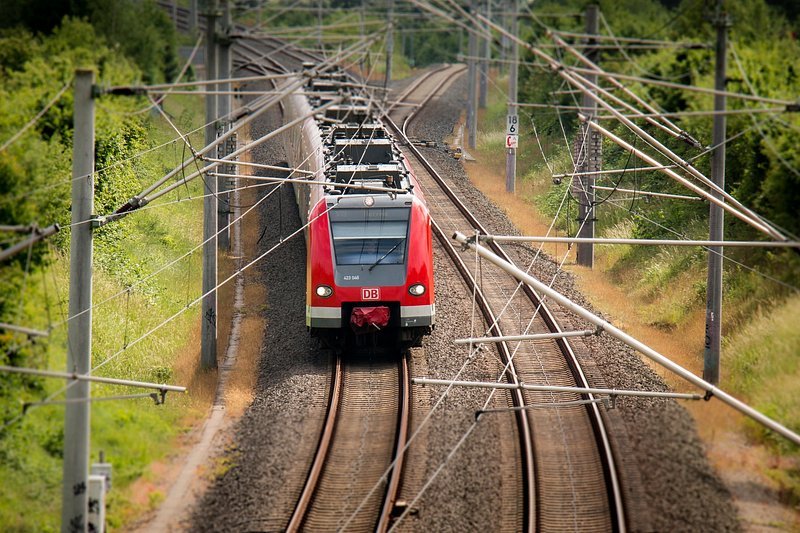
In an overhead system, a device called a pantograph makes contact with an energized overhead conductor. Electricity travels through the pantograph and into the train’s electrical equipment.
In a third-rail system, a collector mounted near the train’s wheels contacts an electrified rail positioned alongside or between the running rails.
Some newer trains can also operate using batteries. These trains store electrical energy onboard and use battery packs to power electric traction motors.
Regardless of the electricity source, the basic objective remains the same: convert electrical energy into mechanical energy that rotates the wheels.
How Does an Electric Train Work?
The basic operation of an electric train can be divided into several stages.
1. Electricity Is Supplied
The railway infrastructure provides electrical energy through an overhead line, third rail, or another electrification system.
2. Electricity Enters the Train
A pantograph, third-rail collector, or other current-collection device transfers electricity into the train.
3. Electrical Equipment Conditions the Power
The incoming electricity may have a voltage and frequency that are different from what the traction motors require.
Transformers, converters, rectifiers, and inverters adjust the electrical power.
4. Traction Motors Produce Rotation
Electric traction motors convert electrical energy into mechanical energy.
5. Gearboxes Transfer Torque
A reduction gearbox can transfer the motor’s rotational force to the axle while adjusting speed and torque.
6. Wheels Move the Train
The powered axles rotate the wheels, producing traction against the rails.
This process happens extremely quickly and can be controlled electronically. Modern trains continuously adjust motor output according to speed, acceleration requirements, wheel conditions, gradients, and other operating parameters.
Main Components of an Electric Train
Although electric trains vary considerably, most contain several important systems.
Pantograph
The pantograph is the articulated device mounted on the roof of many electric trains.
Its purpose is to maintain electrical contact with the overhead wire while the train is moving.
A pantograph must maintain sufficient contact pressure to collect electricity reliably without damaging the overhead equipment.
High-speed trains require especially sophisticated pantograph and overhead-line designs because the contact between the two must remain stable at high speeds.
Transformer
On AC electrified railways, a transformer reduces the incoming voltage to levels suitable for the train’s traction equipment.
Railway electrification systems can use different voltages and frequencies. UIC documentation, for example, covers systems including 25 kV AC, 15 kV AC, 1,500 V DC and 3,000 V DC.
Converter
Power converters regulate the electrical energy supplied to the traction system.
Modern trains use sophisticated power electronics to convert and control electricity efficiently.
Inverter
An inverter converts electrical power into a form suitable for traction motors.
For many modern electric trains, variable-frequency control allows the train’s computers to precisely control motor speed and torque.
Traction Motors
Traction motors are the machines that ultimately convert electrical energy into mechanical motion.
They are typically mounted close to the powered axles.
Electric motors can produce substantial torque from low speeds, which contributes to the strong acceleration of many electric trains.
Gearbox
The gearbox transfers motor torque to the wheels.
Because electric motors can rotate at high speeds, gearing allows their output to be matched to the rotational requirements of the train wheels.
Bogies
A bogie is the wheeled assembly beneath a railway vehicle.
It normally contains wheels, axles, suspension components, braking equipment and, where applicable, traction motors.
Bogie design has a major effect on ride quality, stability, noise and maintenance.
Braking System
Electric trains normally combine electrical braking with conventional friction brakes.
During regenerative braking, the traction motors can operate as generators and convert some of the train’s kinetic energy back into electrical energy. UIC describes regenerative braking as a system that can transfer recovered energy back into the railway system for use by other trains.
Auxiliary Systems
Electric trains also require energy for systems such as:
- Lighting
- Air conditioning
- Heating
- Doors
- Passenger information displays
- Communications
- Signalling equipment
- Computers
- Ventilation
- Onboard entertainment systems
These systems are supplied through auxiliary electrical circuits.
How Electric Trains Get Their Power
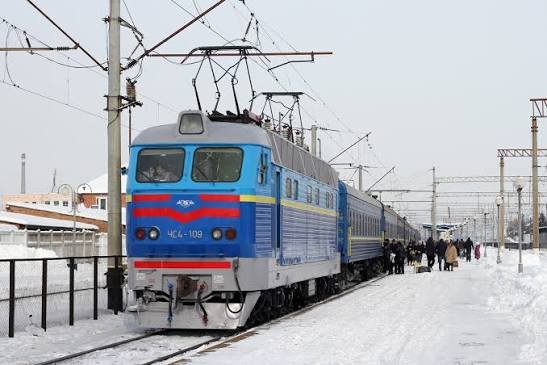
Electric trains can receive electricity through different infrastructure arrangements.
Overhead Catenary Systems
Overhead electrification is one of the most widespread methods.
A series of structures supports electrical conductors above the railway.
The train’s pantograph touches the contact wire while the train moves.
The electricity then travels through the train’s traction equipment.
Overhead systems are particularly common for mainline, freight and high-speed railways.
Third Rail Systems
A third rail is an additional electrified rail positioned alongside or between the running rails.
A collector shoe mounted on the train contacts the third rail.
Third-rail systems are common on some metro and suburban railway networks.
Their lower physical profile can be useful in urban environments, although they require specific safety measures because the energized rail is close to ground level.
Battery Electric Trains
Battery electric trains carry energy storage systems onboard.
They can operate without continuous overhead wires across their entire route.
A battery train may recharge at stations, electrified sections, terminals or dedicated charging infrastructure.
This can be useful on railway lines where installing continuous overhead electrification would be difficult or economically unsuitable.
AC and DC Electric Trains
Electric railways generally use either alternating current or direct current systems.
AC Electric Trains
AC systems are particularly common on mainline and high-speed railways.
High-voltage AC transmission can reduce current requirements for a given power level, which can make it suitable for long-distance railway electrification.
One widely used system is 25 kV AC at 50 Hz.
DC Electric Trains
DC electrification is also widespread, particularly in urban and suburban railway systems.
Common railway DC systems include 750 V, 1,500 V and 3,000 V configurations.
Different networks use different electrical standards because railway electrification developed independently across countries and regions.
Multi-System Trains
Some trains are designed to operate under multiple electrification systems.
These trains can automatically or manually switch between different voltage or frequency environments.
Multi-system capability is particularly useful for international railway services where neighboring countries use different electrification standards.
Electric Train vs Diesel Train
The major difference between an electric and diesel train is the source and conversion of energy.
A diesel locomotive carries fuel onboard and uses a diesel engine to generate mechanical or electrical power.
An electric train receives electricity from an external source or, in battery-electric designs, stores electricity onboard.
| Feature | Electric Train | Diesel Train |
|---|---|---|
| Primary energy | Electricity | Diesel fuel |
| Main traction system | Electric motors | Diesel engine or diesel-electric system |
| Local exhaust emissions | None from traction operation | Yes |
| External infrastructure | Usually required | Generally less dependent on electrified track |
| Acceleration | Often strong | Depends on locomotive design |
| Regenerative braking | Widely applicable | Less straightforward |
| Energy source flexibility | Can use different electricity sources | Primarily liquid fuel |
| Electrification cost | Significant infrastructure investment | Lower infrastructure requirement |
| Noise | Generally lower traction noise | Engine produces substantial noise |
The comparison depends on the complete transport system. An electric railway requires substantial infrastructure investment, including substations, overhead equipment or third rails. A diesel train can operate on non-electrified routes with less specialized infrastructure.
Regenerative Braking in Electric Trains
Regenerative braking is one of the most important efficiency technologies used in modern electric trains.
When a conventional train brakes, much of its kinetic energy is converted into heat through friction.
An electric train can instead use its traction motors as generators.
As the wheels drive the motors, electrical energy is produced.
That energy can then be:
- Used by another train
- Returned to the railway electrical network
- Stored in onboard batteries
- Stored in wayside energy-storage systems
- Dissipated through braking resistors if it cannot be immediately used
UIC documentation explains that regenerative braking can return surplus braking energy to the catenary, while reversible substations can also help transfer recovered energy toward the wider electrical grid.
This makes electric traction particularly suitable for routes with frequent acceleration and braking, such as metro and commuter systems.
Why Electric Trains Accelerate Quickly
Electric motors can provide high torque from low rotational speeds.
This gives electric trains a strong starting force.
Rapid acceleration is particularly useful for commuter railways because trains may stop frequently.
For example, a suburban train making many station stops benefits from being able to accelerate rapidly after leaving each station.
High acceleration can reduce journey times and help operators maintain frequent services without requiring extremely high top speeds.
Types of Electric Trains
Electric trains come in several major categories.
Electric Multiple Units
An Electric Multiple Unit, or EMU, distributes traction equipment across multiple passenger cars rather than concentrating all traction power in a single locomotive.
This arrangement can provide strong acceleration and efficient use of available train length.
EMUs are widely used for commuter, regional and intercity services.
Electric Locomotives
An electric locomotive is a powered railway vehicle that pulls passenger or freight cars.
Electric locomotives can provide very high power and are widely used on intercity and freight networks.
Electric High-Speed Trains
High-speed electric trains are designed for sustained high-speed operation.
They require advanced traction motors, aerodynamic designs, braking systems, signalling and overhead infrastructure.
Many high-speed railway networks rely on electric traction because it provides the continuous power needed for high-speed operation.
Electric Metro Trains
Metro systems frequently use electric traction.
These trains are optimized for high-frequency operation, rapid acceleration and frequent station stops.
Third-rail and overhead electrification are both used in metro systems around the world.
Battery-Electric Trains
Battery trains store electrical energy onboard.
They can travel over non-electrified sections and recharge where infrastructure is available.
They can be useful for routes where full electrification is difficult or where traffic levels do not justify continuous overhead infrastructure.
Electric Freight Trains
Electric freight locomotives can move heavy loads over long distances.
Electric traction can provide high continuous power and strong starting tractive effort.
Freight electrification is therefore particularly valuable on busy corridors carrying large quantities of goods.
Electric High-Speed Trains
High-speed rail is one of the most visible applications of electric traction.
Electric high-speed trains can maintain high speeds while drawing energy continuously from overhead systems.
High-speed railway infrastructure is designed as an integrated system.
It includes:
- Electrification
- Signalling
- Track geometry
- Communications
- Stations
- Bridges and tunnels
- Power substations
- Traffic management
- Specialized rolling stock
The electric train is therefore only one part of the high-speed railway system.
The IEA has noted that high-speed rail can be significantly more energy efficient than air and road transport on a passenger-kilometre basis under appropriate operating conditions.
Electric Trains and Freight Transport
Electric rail is not limited to passengers.
Freight railways can benefit from electric locomotives because heavy trains require substantial traction power.
Electric locomotives can provide high continuous power without carrying large quantities of fuel onboard.
Electrified freight corridors can therefore support large volumes of cargo while reducing direct combustion emissions along the railway.
However, freight electrification can require substantial infrastructure investment because overhead systems must cover long routes.
Benefits of Electric Trains
High Energy Efficiency
Rail is already one of the most energy-efficient forms of transportation, and electric traction can further improve energy performance. The IEA reports that rail carries substantial passenger and freight activity while accounting for a comparatively small share of transport energy demand.
No Direct Tailpipe Exhaust
An electric train does not burn diesel onboard for traction.
Consequently, there are no direct exhaust emissions from a diesel engine along the railway.
However, the overall environmental impact depends partly on how the electricity is generated.
Lower Local Air Pollution
Replacing diesel traction with electric traction can reduce local exhaust pollutants along electrified railway corridors.
This can be especially relevant in densely populated cities.
Strong Acceleration
Electric motors provide strong torque and allow trains to accelerate rapidly.
Regenerative Braking
Electric traction can recover some braking energy and reuse it within the railway system.
High-Speed Capability
Electric traction is well suited to high-speed passenger railway systems.
Energy Source Flexibility
Electric trains can use electricity generated from many different sources.
The electricity supplying a railway can come from natural gas, nuclear power, hydroelectricity, solar, wind, geothermal energy or other generation technologies.
Reduced Dependence on Liquid Fuels
Electrified railways can reduce dependence on diesel and other petroleum-based transportation fuels.
Environmental Impact of Electric Trains
Electric trains are often described as cleaner transportation because they produce no direct exhaust emissions during electric operation.
However, a complete environmental assessment must consider the entire energy chain.
If electricity comes largely from fossil fuels, emissions still occur at power plants.
If electricity comes from low-carbon sources, the overall carbon intensity of electric rail can be substantially lower.
The IEA has emphasized that rail’s energy and environmental advantages depend on the wider transport and energy system, while electrification provides greater flexibility in the energy sources used by railways.
Electric trains can therefore become cleaner over time as electricity generation becomes less carbon-intensive.
Electric Train Infrastructure
Electrifying a railway requires much more than installing wires.
A complete electrification project can involve:
- Traction substations
- Overhead support structures
- Contact wires
- Electrical protection systems
- Signalling modifications
- Bridges and tunnels
- Power distribution equipment
- Sectioning equipment
- Earthing systems
- Maintenance facilities
- Train-compatible electrical equipment
UIC’s electric traction work includes areas such as catenary design and maintenance, digital control of substations and energy management.
Railway Substations
Traction substations supply electricity to railway lines.
They transform or convert electricity from the wider grid into a form suitable for railway traction.
Their design depends on the railway’s electrical system.
Modern railway power systems can also incorporate technologies that recover regenerative braking energy.
UIC’s recent guidance addresses reversible substations that can convert recovered DC traction energy and return surplus electricity toward the grid.
Electric Trains in Tanzania
Electric rail transportation is particularly relevant to Tanzania because the country is developing an electrified Standard Gauge Railway network.
The International Energy Agency’s current policy database describes Tanzania’s SGR programme as a 2,561-kilometre electrified railway network intended to connect Dar es Salaam with inland regions and neighboring countries. The programme is part of a broader effort to modernize the country’s railway infrastructure.
Electrified rail can support passenger and freight transportation while reducing reliance on diesel traction on electrified routes.
The success of such systems depends on reliable electricity supply, railway maintenance, signalling, rolling-stock availability, operational management and continued investment in infrastructure.
Challenges of Electric Trains
High Infrastructure Cost
Electrifying a railway requires major investment.
Overhead wires, substations, bridges, electrical equipment and maintenance facilities can make electrification expensive.
Grid Dependence
Electric trains depend on a reliable power supply.
Power interruptions can affect railway operations unless backup systems or alternative operating arrangements are available.
Electrification of Low-Traffic Lines
For routes with relatively little traffic, full electrification may not always be economically attractive.
Battery or other alternative traction technologies may be considered instead.
Complex Maintenance
Electrification adds equipment that must be inspected and maintained.
Overhead wires, pantographs, substations and electrical protection systems all require specialized expertise.
Different Railway Standards
Countries and railway networks may use different voltage and frequency systems.
This can complicate international rail operations.
Upfront Environmental Impact
Building electrical infrastructure requires steel, concrete, copper and other materials.
Therefore, the environmental benefits of electrification should be considered over the entire lifecycle rather than only during train operation.
Electric Trains and Renewable Energy
One of the most important advantages of electric railway systems is their ability to use electricity from different generation sources.
A railway electrified today can potentially become less carbon-intensive as the electricity grid adds more low-carbon generation.
This differs from a conventional diesel locomotive, whose onboard energy source remains liquid fuel.
Railway operators can also explore direct renewable-energy procurement, solar installations, energy storage and improved energy management.
The UIC has identified energy management, reversible substations and improvements to traction power systems as areas for reducing railway energy consumption and costs.
Future of Electric Trains
The future of electric trains is likely to involve several technologies developing simultaneously.
More Efficient Traction Motors
New generations of motors, power electronics and control systems can reduce energy losses.
Smarter Regenerative Braking
Advanced energy-management systems can better coordinate braking energy with other trains and the railway power network.
Battery-Assisted Trains
Batteries can extend the reach of trains beyond electrified sections.
Renewable Electricity
Increasing use of renewable electricity can further reduce the carbon intensity of electric rail.
Digital Railway Systems
Artificial intelligence, sensors, automation and predictive maintenance can help railway operators improve efficiency and reliability.
Automated Train Operation
Automatic and highly automated train systems can optimize acceleration, braking and stopping while improving operational consistency.
Higher-Speed Rail
Electric traction will continue to play a central role in high-speed rail because of its ability to deliver continuous power at high speeds.
Energy Storage
Stationary batteries and other storage technologies can capture excess regenerative braking energy and return it when needed.
Electric Trains vs Battery Trains
Both technologies use electric motors, but their energy supply differs.
An overhead electric train continuously receives electricity from railway infrastructure.
A battery-electric train stores energy onboard.
| Feature | Conventional Electric Train | Battery-Electric Train |
|---|---|---|
| Main energy source | External electricity | Onboard battery |
| Overhead wires | Usually required | Not required over entire route |
| Battery size | Usually smaller | Much larger |
| Range without electrification | Limited | Available |
| Charging infrastructure | Traction network | Charging/electrified sections |
| Long-distance suitability | Strong | Depends on battery capacity and route |
| Infrastructure cost | High for full electrification | Potentially lower on selected routes |
The best solution depends on route length, traffic volume, terrain, energy requirements and infrastructure costs.
Electric Trains vs Hydrogen Trains
Hydrogen trains use fuel cells to generate electricity onboard.
Electric trains receive electricity directly from the railway system or carry it in batteries.
Hydrogen can provide an alternative for some non-electrified routes, but it requires hydrogen production, storage and refueling infrastructure.
Direct electric traction avoids the need to convert electricity into hydrogen and then convert hydrogen back into electricity through a fuel cell.
The appropriate technology therefore depends on the characteristics of each railway route.
Maintenance of Electric Trains
Electric trains require maintenance of both mechanical and electrical systems.
Important maintenance areas include:
- Traction motors
- Pantographs
- Transformers
- Inverters
- Braking systems
- Bogies
- Wheels
- Doors
- HVAC systems
- Batteries
- Control electronics
- Electrical insulation
- High-voltage components
Condition monitoring can identify potential problems before they cause failures.
Sensors can monitor temperature, vibration, electrical characteristics, wheel condition and other parameters.
Predictive maintenance can then be used to schedule repairs before equipment fails during service.
Safety of Electric Trains
Electric railway systems operate with potentially dangerous voltages.
Only trained and authorized personnel should work on energized railway equipment.
Safety systems include:
- Circuit breakers
- Electrical protection systems
- Earthing and grounding
- Isolation procedures
- Warning systems
- Insulated equipment
- Emergency shutdown systems
- Controlled access to electrical infrastructure
Passengers should never touch or approach electrified railway equipment.
Third-rail systems require particular attention because the energized rail can be located close to the track and platform environment.
Frequently Asked Questions About Electric Trains
What is an electric train?
An electric train is a railway vehicle that uses electricity to power traction motors. Electricity can come from overhead wires, third rails, batteries or other electrical supply systems.
How does an electric train move?
Electricity powers traction motors, which produce rotational force. That force is transmitted through the drivetrain to the wheels, causing the train to move.
Do electric trains use batteries?
Some do. Conventional electric trains normally receive power continuously from railway infrastructure, while battery-electric trains store significant amounts of energy onboard.
How does an electric train get electricity?
Most electric trains receive electricity through an overhead pantograph or third-rail collector. Battery-electric trains carry their electricity onboard.
Are electric trains faster than diesel trains?
Electric traction is well suited to high-speed operation and can provide strong acceleration, but maximum speed depends on the entire train and railway system, including track, signalling, aerodynamics and infrastructure.
Are electric trains environmentally friendly?
Electric trains produce no direct exhaust emissions from onboard combustion. Their total environmental impact depends partly on electricity generation, infrastructure construction, train manufacturing and other lifecycle factors.
Can electric trains use renewable energy?
Yes. Electric railways can be powered by electricity generated from renewable sources such as solar, wind and hydropower.
What is regenerative braking in an electric train?
Regenerative braking uses the traction motors as generators during deceleration, converting some kinetic energy into electrical energy that can potentially be reused or returned to the railway power system.
What is a pantograph?
A pantograph is a mechanical device mounted on the roof of many electric trains. It maintains contact with an overhead electrical wire and transfers electricity into the train.
What is a third rail?
A third rail is an additional electrified rail used to supply electricity to trains through a collector shoe.
Can electric trains operate without overhead wires?
Yes. Some electric trains use third rails or onboard batteries. Conventional overhead electric trains, however, require electrified infrastructure along the route.
Are electric trains cheaper to operate than diesel trains?
Operating economics depend on electricity and fuel prices, infrastructure costs, utilization, maintenance and route characteristics. Electric trains can offer efficiency advantages, but electrification requires substantial upfront infrastructure investment.
Are electric trains used for freight?
Yes. Electric locomotives are widely used for freight transportation, particularly on heavily trafficked electrified corridors.
Why are electric trains common in cities?
Electric trains are well suited to urban and suburban services because they can accelerate quickly, support frequent stops and avoid direct diesel exhaust emissions along the route.
Sources:International Energy Agency (IEA) and the International Union of Railways (UIC), while information on Tanzania’s electrified Standard Gauge Railway programme can be found through the IEA policy database.