
Virtual Reality, commonly known as VR, is a technology that creates computer-generated environments designed to make users feel as though they are inside a different digital world. Instead of simply viewing information on a conventional screen, users can interact with three-dimensional environments and experience digital content from a first-person perspective.

Virtual reality has become increasingly important across entertainment, gaming, education, healthcare, engineering, architecture, tourism, military training, retail, workplace collaboration, and scientific research. Modern VR systems can track a user’s head and body movements, display stereoscopic images, reproduce spatial audio, and allow interaction with virtual objects.
Although virtual reality is often associated with gaming, its applications extend far beyond entertainment. Medical students can practice procedures in simulated environments, engineers can inspect virtual designs, architects can walk through digital buildings before construction, and organizations can use VR for employee training without exposing workers to certain real-world risks.
Table of Contents
VR is also closely related to technologies such as Augmented Reality (AR), Mixed Reality (MR), and Extended Reality (XR). While these technologies overlap, they create different relationships between digital information and the physical world.
Understanding virtual reality involves examining how VR systems work, the hardware and software behind them, their major applications, their advantages and limitations, and how the technology may evolve in the future.
What Is Virtual Reality?
Virtual Reality is a technology that uses computer-generated digital environments to create an immersive experience for the user.
A VR system typically presents separate images to the user’s eyes, creating a perception of depth. Sensors track movements such as head rotation and position, allowing the virtual environment to respond as the user moves.
A basic VR experience may involve wearing a headset and looking around a simulated environment.
More advanced systems allow users to:
- Move around virtual environments
- Pick up and manipulate virtual objects
- Communicate with other users
- Hear sounds from different directions
- Interact with simulated machines
- Practice procedures
- Explore virtual buildings
- Play immersive games
- Attend virtual events
The central idea behind VR is presence: creating the perception of being located within a digitally generated environment rather than merely looking at it through a conventional screen.
How Does Virtual Reality Work?
Virtual reality combines hardware, software, graphics, sensors, tracking technologies, and human-computer interaction.
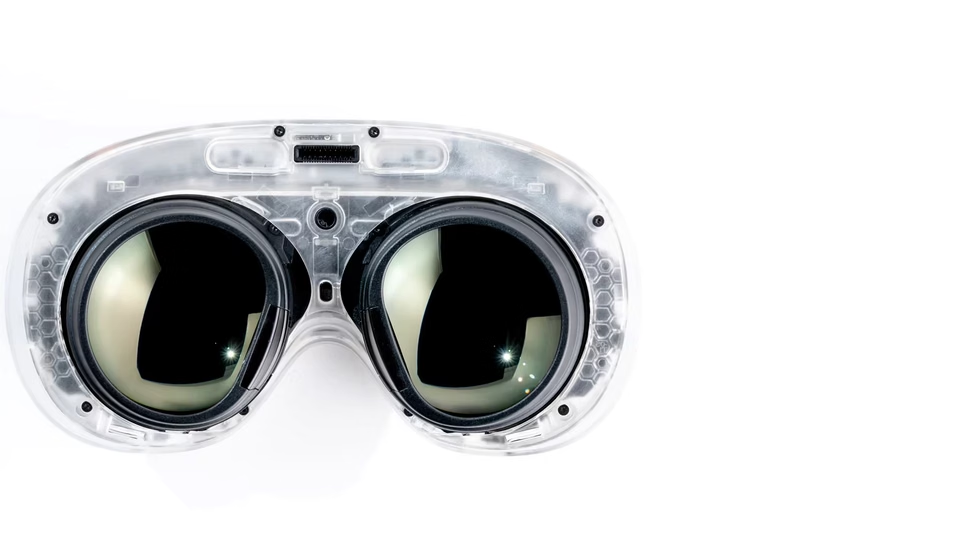
VR Headset
The headset is one of the most recognizable parts of a VR system.
It contains displays positioned close to the user’s eyes.
The displays present slightly different images to each eye, creating stereoscopic depth.
The headset also contains lenses that help the user focus on the displays.
Motion Tracking
VR systems track movements so that the virtual environment can respond appropriately.
Head tracking allows the system to determine whether the user is looking left, right, up, down, or in another direction.
More advanced systems can track the user’s position in three-dimensional space.
Controllers
Many VR systems use handheld controllers.
Controllers may contain buttons, triggers, joysticks, motion sensors, and other input technologies.
They allow users to interact with virtual objects, select menus, operate tools, or control characters.
Some newer systems can also track hand movements directly, reducing the need for physical controllers.
Spatial Audio
Sound contributes significantly to immersion.
VR systems can use spatial audio to make sounds appear to come from specific directions or locations.
For example, a virtual object positioned behind the user may produce sound that appears to originate from behind them.
Computer Processing
A computer, console, smartphone, or processor integrated into the headset generates the virtual environment.
The system must continuously render images as the user moves.
This requires low-latency processing because delays between movement and visual response can reduce immersion and may contribute to discomfort.
Main Components of a Virtual Reality System
A complete VR system may contain several components.
Display
The display presents the virtual environment.
Important characteristics include resolution, refresh rate, field of view, brightness, and display technology.
Lenses
Lenses help focus and magnify the display so it can be viewed comfortably at close range.
Tracking Sensors
Sensors determine the position and movement of the headset and, depending on the system, controllers or other objects.
Cameras
Some VR headsets contain external-facing cameras.
These cameras can support inside-out tracking, hand tracking, environmental understanding, and mixed-reality functions.
Processor
The processor handles tasks such as graphics, tracking, physics calculations, audio processing, and application execution.
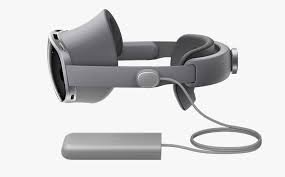
Battery
Standalone VR headsets contain batteries that allow them to operate without a continuously connected computer.
Controllers
Controllers provide physical input for interacting with virtual environments.
Types of Virtual Reality
VR can be classified in several ways depending on the degree of immersion and the technology used.
Non-Immersive Virtual Reality
Non-immersive systems provide virtual environments through conventional displays such as computer monitors.
The user interacts with the virtual environment but does not necessarily experience the same level of physical immersion provided by a head-mounted display.
Many simulation and visualization applications fall somewhere along the boundary between conventional computer graphics and VR.
Semi-Immersive Virtual Reality
Semi-immersive systems provide a stronger sense of immersion than ordinary screens but do not completely surround the user’s field of view.
Large projection systems and specialized simulation environments can provide semi-immersive experiences.
Fully Immersive Virtual Reality
Fully immersive VR generally involves a head-mounted display that covers much of the user’s field of view and tracks head movement.
The user can look around a three-dimensional virtual environment and may interact with it using controllers, hand tracking, or other input devices.
Room-Scale VR
Room-scale VR allows the user to physically move around a defined space while the system tracks their position.
The virtual environment can respond to real-world movement.
This makes experiences more interactive because users are not restricted to sitting or standing in one position.
Social Virtual Reality
Social VR allows multiple users to enter shared virtual environments.
Participants may communicate through avatars, voice, gestures, or other digital representations.
Applications include virtual meetings, social communities, education, events, and collaborative work.
Virtual Reality vs Augmented Reality
Virtual Reality and Augmented Reality are related but different.
Virtual Reality primarily replaces the user’s visual environment with a computer-generated environment.
Augmented Reality adds digital information or objects to the user’s view of the physical world.
For example, a VR user might enter a completely simulated laboratory.
An AR user might look at a real laboratory while digital instructions appear over physical equipment.
Virtual Reality vs Mixed Reality
Mixed Reality generally refers to experiences where physical and digital elements interact more closely.
A mixed-reality system may allow virtual objects to appear anchored to real-world surfaces and respond to the physical environment.
The boundaries between VR, AR, and MR can vary depending on how manufacturers and researchers define them.
Together, these technologies are often discussed under the broader term Extended Reality, or XR.
Applications of Virtual Reality
Virtual reality is being used across many industries.
VR in Gaming
Gaming is one of the most visible applications of VR.
Traditional video games display a virtual world on a screen.
VR games can place the player directly inside the environment.
Players may look around naturally, physically move, and interact with virtual objects using controllers or hand tracking.
VR can support genres such as:
- Action games
- Adventure games
- Simulation games
- Sports games
- Racing games
- Horror experiences
- Puzzle games
- Social games
- Educational games
The immersive nature of VR can make players feel more physically connected to the game environment.
VR in Education
Virtual reality can provide students with experiences that may be difficult, expensive, dangerous, or impossible to reproduce in an ordinary classroom.
For example, students can explore:
- Historical environments
- The human body
- Space
- Ocean ecosystems
- Laboratories
- Industrial facilities
- Geographic locations
- Engineering systems
A biology student might explore a three-dimensional model of the human heart.
A history student could explore a reconstruction of an ancient city.
VR can therefore complement traditional teaching by providing experiential learning opportunities.
VR in Healthcare
Healthcare is another important area for VR research and application.
Medical Training
Medical students and professionals can use simulations to practice procedures in controlled environments.
Virtual simulations can allow learners to repeat scenarios without requiring a real patient.
Rehabilitation
VR has been explored for physical rehabilitation and neurological rehabilitation.
Interactive environments can encourage patients to perform prescribed movements and exercises.
Mental Health Applications
VR has also been studied for certain psychological interventions, including exposure-based approaches.
A controlled virtual environment can allow therapists to expose patients to simulated situations under supervised conditions.
Surgical Training
VR simulations can help clinicians practice surgical procedures and become familiar with anatomy and instruments.
However, virtual training does not automatically replace real-world clinical education and supervision.
VR in Engineering
Engineers can use VR to visualize complex designs before physical prototypes are created.
For example, engineers can inspect a virtual machine and examine components from different angles.
VR can help identify design problems early and support collaboration between geographically separated teams.
VR in Architecture and Construction
Architects can create virtual models of buildings that clients and design teams can explore.
Instead of looking at a flat architectural drawing, a user can enter a virtual representation of the proposed building.
This can help stakeholders understand:
- Room sizes
- Building layouts
- Interior spaces
- Lighting concepts
- Circulation
- Furniture arrangements
VR can also be used to visualize construction projects before work begins.
VR in Manufacturing
Manufacturers can use VR for product design, factory planning, worker training, equipment simulation, and maintenance training.
Workers can practice procedures in a simulated environment before performing them on real equipment.
This can reduce the need to use expensive physical machinery during some training activities.
VR in Military Training
Military organizations have used simulation technologies for training and mission preparation.
VR can simulate environments and scenarios that would be expensive or dangerous to reproduce physically.
Potential applications include vehicle operation, equipment training, navigation, tactical simulations, and emergency scenarios.
VR in Aviation
Flight simulation is a long-established application of immersive simulation.
Pilots can train using simulated aircraft controls and environments.
VR and related immersive technologies can supplement other forms of aviation training, particularly for familiarization and procedural practice.
VR in Tourism
Virtual reality can allow people to explore destinations before traveling.
Museums, hotels, tourism organizations, and cultural institutions can use VR to provide virtual tours.
People may be able to explore landmarks, historical sites, galleries, or natural environments from remote locations.
VR in Retail
Retailers can use VR to create virtual showrooms and product experiences.
Customers may be able to explore furniture arrangements, clothing environments, vehicles, buildings, or other products before making purchasing decisions.
VR in Real Estate
Real estate companies can use VR to create virtual property tours.
A prospective buyer or tenant can explore a property remotely without physically visiting the location.
This can be particularly useful for properties under construction or for clients who live far away.
VR in Workplace Training
Organizations can use VR for employee training.
Examples include:
- Workplace safety
- Emergency response
- Equipment operation
- Customer service
- Industrial procedures
- Medical training
- Hazard recognition
The ability to repeat simulations can help learners practice procedures in a controlled environment.
Benefits of Virtual Reality
Virtual reality offers several potential advantages.
Immersive Learning
VR can transform abstract information into interactive experiences.
Safe Simulation
Dangerous situations can sometimes be simulated without exposing users to the physical risks of the real environment.
Repetition
Users can repeat virtual training exercises multiple times.
Cost Savings
Although VR systems require investment, simulation can reduce the need for some physical training environments, prototypes, or travel.
Remote Experiences
VR can allow people to explore environments without physically traveling to them.
Improved Visualization
Three-dimensional environments can make complex designs easier to understand.
Engagement
Interactive environments can increase user engagement compared with some conventional forms of digital content.
Accessibility to Experiences
VR can provide virtual access to environments that may be geographically distant or otherwise difficult to visit.
Challenges and Limitations of Virtual Reality
VR also has limitations.
Motion Sickness
Some users experience nausea, dizziness, headaches, or discomfort when virtual movement does not perfectly correspond with physical movement.
This is commonly associated with a mismatch between visual and vestibular signals.
Cost
High-quality VR systems can require expensive headsets, computers, software, sensors, and other equipment.
Physical Space
Some experiences require sufficient physical space for safe movement.
Isolation
Users wearing VR headsets may have reduced awareness of their physical surroundings.
This can create safety concerns if people walk into objects, other people, stairs, or other hazards.
Technical Requirements
High-quality immersive experiences can require substantial computing performance.
Content Limitations
The usefulness of VR depends heavily on the quality and availability of appropriate software.
Accessibility
Some users may have difficulty using VR because of physical, visual, auditory, cognitive, or other accessibility considerations.
Developers therefore need to consider inclusive design.
Health and Safety Considerations
Using VR responsibly requires attention to the physical environment and the user’s condition.
Users should ensure that the play area is clear of obstacles.
Headsets can reduce awareness of the surrounding environment, so users should avoid using immersive systems in locations where unexpected movement could cause injury.
Users who experience significant dizziness, nausea, headaches, eye strain, or disorientation should stop using the system and allow symptoms to settle.
Children may require additional supervision and should follow the manufacturer’s age and safety guidance.
People with particular medical conditions should consult an appropriate healthcare professional if they have concerns about VR use.
Virtual Reality and Artificial Intelligence
AI and VR are increasingly being combined.
Artificial intelligence can help VR systems understand environments, interpret voice commands, generate virtual characters, personalize experiences, and create digital content.
For example, an AI-powered virtual character could respond conversationally to a user inside a VR environment.
AI can also assist developers in generating virtual objects, environments, dialogue, animations, and other content.
This combination could make immersive environments more dynamic and interactive.
Virtual Reality and the Metaverse
The term “metaverse” is often associated with persistent digital environments where people can interact through avatars.
VR can provide one way of accessing such environments, but the metaverse is broader than VR alone.
A metaverse concept may include:
- Virtual worlds
- Augmented reality
- Digital avatars
- Social platforms
- Virtual commerce
- Digital events
- Persistent online environments
VR can provide an immersive interface for these environments, but users do not necessarily need VR hardware to participate in every type of metaverse experience.
The Future of Virtual Reality
VR technology is likely to continue evolving in several areas.
Smaller and Lighter Headsets
Future headsets may become thinner, lighter, and more comfortable.
Reducing weight is particularly important for long-duration use.
Higher-Resolution Displays
Improved displays can make virtual environments appear more realistic.
Higher pixel density can reduce visible screen-door effects and improve text readability.
Better Eye Tracking
Eye tracking can allow systems to determine where users are looking.
It can support interaction, accessibility, analytics, and rendering techniques such as foveated rendering.
Improved Hand Tracking
Hand tracking can reduce dependence on physical controllers.
Users may increasingly interact with virtual objects through natural gestures.
Wireless VR
Wireless systems can provide greater freedom of movement by reducing cables connecting the headset to a computer.
Better Haptic Feedback
Haptic technology attempts to provide a sense of touch.
Future systems may provide more sophisticated feedback through controllers, gloves, suits, or other wearable devices.
AI-Generated Virtual Worlds
Generative AI could make it easier to create virtual environments, objects, characters, and interactive experiences.
Instead of manually designing every element, developers may increasingly describe environments using natural language or other high-level instructions.
Cloud and Edge Computing
Some VR workloads may increasingly use cloud or edge computing to provide additional processing power.
However, low latency remains essential for comfortable immersive experiences.
Virtual Reality in Developing Regions
VR has potential applications in regions where access to specialized physical infrastructure may be limited.
For example, virtual training could supplement education in fields requiring expensive equipment or specialized facilities.
Healthcare training, technical education, agricultural instruction, tourism, and cultural preservation are potential areas of interest.
However, widespread adoption can be constrained by hardware costs, electricity availability, internet connectivity, local content development, technical support, and digital skills.
For VR to provide sustainable benefits, technology deployment needs to account for local infrastructure and user requirements rather than simply transferring solutions developed for high-income markets.
Frequently Asked Questions About Virtual Reality
What is virtual reality in simple terms?
Virtual reality is a technology that creates computer-generated environments that users can experience and interact with, usually through a VR headset.
How does a VR headset work?
A VR headset uses displays and lenses to present slightly different images to each eye while sensors track head movement. The system continuously adjusts the displayed environment according to the user’s movements.
What is VR used for?
VR is used for gaming, education, healthcare, training, engineering, architecture, manufacturing, tourism, military simulation, aviation, retail, real estate, and many other applications.
Is virtual reality the same as augmented reality?
No. VR generally places users inside a computer-generated environment, while AR adds digital information or objects to the user’s view of the physical world.
What is mixed reality?
Mixed Reality combines digital and physical elements so that virtual objects can interact with or remain anchored to the user’s physical environment.
Can VR be used in education?
Yes. VR can provide immersive educational experiences such as virtual laboratories, historical environments, scientific simulations, medical training, and three-dimensional exploration.
Can virtual reality be used in healthcare?
Yes. VR is used and studied for medical training, rehabilitation, therapy-related applications, visualization, and other healthcare purposes.
Does VR cause motion sickness?
Some people experience motion sickness, dizziness, nausea, eye strain, or headaches while using VR. The likelihood can depend on the application, movement design, hardware, and individual sensitivity.
Is virtual reality safe?
VR can generally be used safely when appropriate precautions are followed, but users should be aware of risks involving motion sickness, physical obstacles, reduced environmental awareness, and prolonged use.
Does VR require a powerful computer?
Not always. Some VR headsets operate independently, while others require or can connect to a powerful computer or gaming system for more demanding applications.
What is room-scale VR?
Room-scale VR tracks a user’s movement through a physical space and allows them to move around a corresponding virtual environment.
Can VR replace real-world training?
VR can supplement certain forms of training and provide useful simulation, but it does not automatically replace hands-on experience, professional supervision, or real-world practice.
What is the future of virtual reality?
The future of VR is likely to include lighter headsets, higher-resolution displays, improved tracking, better hand and eye interaction, advanced haptics, AI-generated environments, improved wireless connectivity, and stronger integration with augmented and mixed reality.
